Icy Pavements and Your Dog
Canine First Aid Winter Tips: Navigating Icy Pavements with Our Furry Friends
There's something truly magical about winter mornings in the UK, isn't there? Crisp air, sparkling frost, and that unique quiet. But for us dog owners, those picturesque scenes often come with a hidden layer of worry, especially when the pavements become treacherous sheets of ice. As much as we adore our four-legged family members, their safety, warmth, and overall well-being become an even bigger priority during these colder months. That's precisely why having a solid grasp of crucial canine first aid winter tips isn't just helpful – it's absolutely essential.
You see, being prepared isn't about being overly cautious; it's about understanding the specific risks winter throws at us and knowing exactly how to respond if an unexpected tumble or exposure occurs. From those deceptively slippery surfaces to the hidden, sometimes toxic, hazards like de-icing salts, the colder season demands a heightened sense of awareness from all of us. Trust me, equipping yourself with practical, real-world knowledge – the kind you'd pick up from a brilliant pet first aid course– can genuinely be a game-changer. So, let's take a deep breath and explore together what you really need to know to navigate this frosty wonderland with confidence, ensuring your beloved dog stays as safe and happy as can be.

Understanding Winter Hazards for Your Dog
Winter conditions, as beautiful as they are, certainly throw up some unique dangers that can easily catch even the most attentive of us off guard. We've all seen those notoriously icy pavements – they're probably the most obvious culprit, leading to those heart-stopping slips, nasty strains, and even fractures. But here's the thing: beyond the glaringly obvious ice, there's a whole host of other, often overlooked, threats lurking about. It’s a bit like an invisible minefield sometimes.
De-icing Salts and Chemicals:Ah, the bane of many a dog's paw! These aren't just irritating; they can actually cause nasty chemical burns on delicate paw pads. And if your dog, like mine, has a habit of licking their feet after a walk (which most do!), these substances become toxic when ingested. It’s a double whammy of danger, isn't it?
Antifreeze:This one chills me to the bone. Antifreeze is incredibly toxic, and here's the kicker – it often has a surprisingly sweet taste that, tragically, makes it appealing to curious dogs. Even a tiny amount can be lethal, so spilled puddles near driveways or garages are a serious no-go zone.
Extreme Cold and Hypothermia:We might bundle ourselves up, but sometimes we forget that our dogs, especially the smaller breeds, those with short hair, or our cherished older companions, are incredibly susceptible to the cold. Prolonged exposure can lead to hypothermia – a dangerously low body temperature – or even frostbite, which can be life-threatening if not caught in time.
Reduced Visibility:Remember those lovely long summer evenings? Well, winter flips that on its head. Shorter daylight hours mean many of our walks happen in dimmer light, at dusk, or even in full darkness. This significantly increases the risk of road accidents, as drivers might struggle to see us and our furry friends.
Honestly, simply being aware of these potential pitfalls is your absolute best first line of defence. Knowing what to keep an eye out for gives you the power to proactively protect your dog, rather than just reacting to a problem.
Essential Canine First Aid Winter Tips for Paws and Body
Okay, so we've talked about the scary bits. Now, let's get into the practical stuff – how we actively protect our dogs through winter. It's truly about more than just ensuring they've got a cosy coat; it’s about smart, active prevention and knowing exactly how to respond if something does go awry. Here are some really key canine first aid winter tipsI swear by:
Paw Protection is Paramount
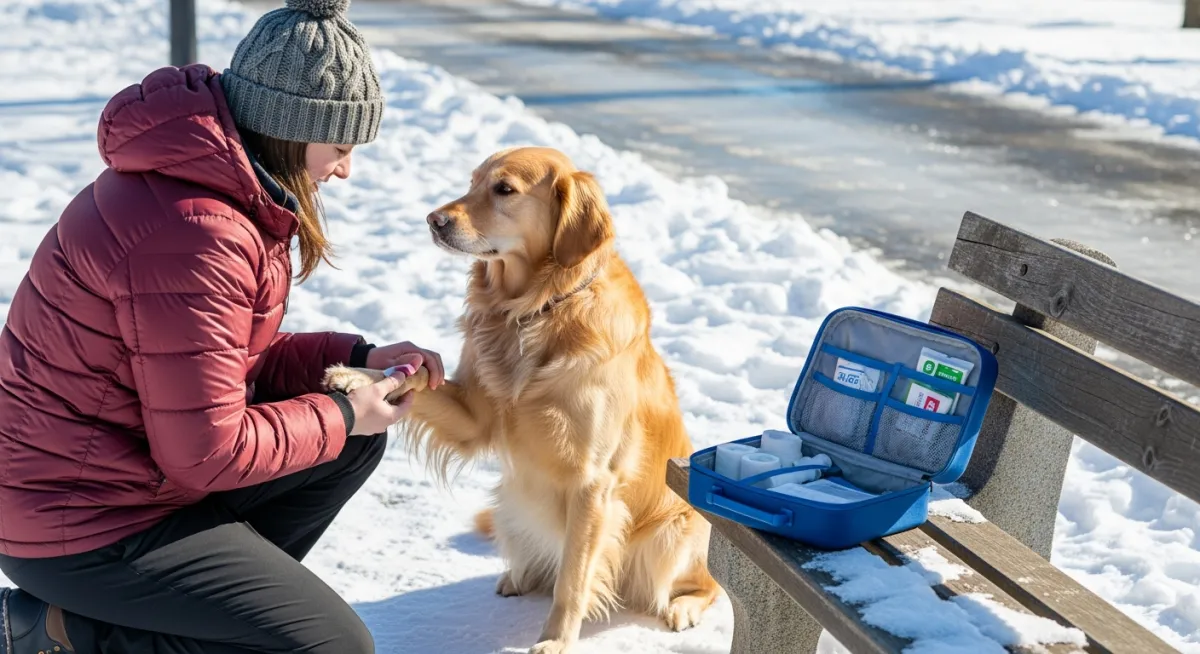
Just think about it: your dog's paws are their primary contact with the ground, their little frontline warriors against winter's brutal elements. Those icy paths, abrasive grit, and corrosive rock salt can easily lead to excruciating cracks, nasty cuts, and persistent irritation. This is why I always make a point of inspecting my dog's paws the moment we get back through the door after any winter walk. It takes just a minute, but it can save a lot of discomfort.
First things first, a thorough paw wash with warm water is a must. This isn't just about cleanliness; it's vital for rinsing away any lingering salt, chemicals, or grit that could cause harm.
Next, give each paw a careful once-over. Are there any tiny cuts, suspicious cracks, or bits of grit stubbornly embedded between their pads? Catching these early prevents bigger problems.
And consider a little pre-emptive strike! Using specially designed dog boots (if your dog tolerates them, of course!) or a protective paw balm before heading out can create an invaluable barrier against the harshness outside. Think of it as their winter skincare routine.
Recognising Signs of Hypothermia and Frostbite
It's easy to assume our furry friends are immune to the cold, but they can absolutely suffer from cold-related injuries, just like us. We're talking about conditions like hypothermia, which is when a dog's body temperature drops to a dangerously low level, and frostbite, which is actual tissue damage caused by freezing. Spotting these early is incredibly important for effective dog first aid– it can literally be a lifesaver.
Signs of Hypothermia:Look out for persistent shivering, a general sense of lethargy, unusual weakness, shallow or laboured breathing, and a body that feels noticeably cold to the touch. In really severe cases, a dog might even collapse or become unconscious. If you see these, act fast.
Signs of Frostbite:This can be a bit trickier to spot initially. You might notice discoloured skin – perhaps pale, grey, or even bluish – along with coldness and pain when you touch the affected area. The real damage often becomes apparent after thawing, when the skin can turn red, swell up, and even blister. This is why you must avoid rubbing the area. It can actually cause more damage!
If you ever suspect your dog is suffering from either hypothermia or frostbite, your immediate priority is to gently wrap them in warm blankets, get them into a warm environment, and, without delay, seek veterinary attention. And please, resist the urge to rub the affected areas; it can sadly cause far more damage than good.
Preparing Your Winter-Ready Dog First Aid Kit
Now, I’m a firm believer that a well-stocked dog first aid kit isn't just for emergencies; it's a staple for any responsible pet owner, regardless of the season. But, when winter rolls around, adding a few specific items can genuinely be a game-changer. Think of it as upgrading your standard kit to a 'winter warrior' version. Beyond the usual basics you already have, here’s what I’d strongly suggest you consider including:
Paw balm or wax:This isn’t just a fancy extra; it’s a crucial barrier against the damaging effects of salt, ice, and cold on their delicate paw pads. Applying it before walks really makes a difference.
Extra blankets or an emergency foil blanket:Imagine your dog gets injured and can’t move, or perhaps they’re showing early signs of hypothermia. Having something immediately on hand to provide warmth could be critical. These don’t take up much space and offer immense peace of mind.
Antiseptic wipes or solution:For those minor nicks, scrapes, or just to thoroughly clean paws after a salty walk, these are invaluable. Keeping infection at bay is always a priority.
Gauze pads and self-adhering bandages:Accidents happen, and a cut paw needs immediate attention. These are perfect for staunching bleeding and protecting a wound until you can get to a vet.
A small, reliable torch:With those shorter days, many of us find ourselves walking in the dark. A powerful torch isn't just for finding dropped leads; it dramatically improves visibility for both you and your dog, making you safer on pavements and roads.
Honestly, it's not enough to just have the kit. Get into the habit of regularly checking and replenishing it. Make sure you know exactly where everything is, and ideally, have a basic understanding of how to use each item. That familiarity will save you precious time and panic in a real emergency. This whole proactive approach, I believe, is the absolute cornerstone of truly effective animal first aid– it’s about being ready for anything.
Staying Safe on Icy Pavements: Prevention is Key
I think we can all agree on this: prevention truly is always, always better than cure. There's nothing quite like the feeling of knowing you've done everything you can to avoid a tricky situation. So, let’s talk about some really practical steps you can take to significantly minimise the risks when those pavements get icy and treacherous:
Adjust Your Walk Times:If your schedule allows, try to shift your dog walks to daylight hours. Not only are temperatures often a tiny bit milder (which helps with ice melt), but your visibility, and more importantly, your dog's visibility to others, is dramatically improved. It just feels safer all around.
Choose Safe Routes Wisely:This is where a bit of local knowledge comes in handy. Try to seek out grassy areas, parks, or paths that you know are generally well-maintained and clear of ice and those nasty de-icing chemicals. And definitely, definitely steer clear of busy roads where passing traffic can splash up dirty, salty slush – it’s a recipe for sore paws and irritation.
Keep Them on a Lead:This might seem obvious, but it’s absolutely critical on icy surfaces. A sudden slip could send your dog hurtling into the road or towards a dangerous area. Plus, if they're off-lead, they might be more inclined to investigate and perhaps ingest tempting, but toxic, substances like spilled antifreeze. Better safe than sorry, I always say.
Dress for the Weather:For our short-haired breeds, the smaller pooches, and especially our senior dogs, a warm coat or even a cosy jumper isn't just a fashion statement; it's a necessity. It helps them retain their body heat and prevents them from getting dangerously cold, making their walk far more comfortable and safer.
Now, even with all these best-laid plans and precautions, life happens, doesn't it? Accidents, unfortunately, can still occur. That's precisely why having a solid grasp of canine first aid principles isn't just a good idea; it's genuinely invaluable for every single dog owner across the country. It gives you that confidence to act when it matters most.
Conclusion: Embrace Winter, Prepared and Safe
Winter walks truly are one of life's simple joys for so many of our dogs, aren't they? The crisp air, the crunch of frost underfoot – it's an adventure. And with the right proactive steps and a bit of foresight, they absolutely can remain wonderfully safe and full of fun. When you take the time to implement these essential canine first aid winter tips, you're doing so much more than just reacting to potential problems; you’re actively putting prevention into practice, which is always the best defence.
Knowing the specific hazards that icy pavements and the cold weather bring, meticulously preparing your dog’s first aid kit, and understanding how to quickly spot and confidently treat minor injuries – all of this isn't just about ticking boxes. It grants you an immense sense of peace of mind, allowing you to truly enjoy those frosty outings without constant worry.
Always remember, your quick thinking and the knowledge you gain can genuinely make a critical, even life-saving, difference in an emergency. So, if you’re keen to truly deepen your understanding and hone those practical skills, I can’t recommend enough exploring comprehensive pet first aid training. It’s an investment, not just for winter, but for being fully prepared for any eventuality, come rain, shine, or snow.
So, go on, enjoy that beautiful winter wonderland with your beloved companion. Stay warm, stay safe, and make those memories!

Testimonials
Quite simply for the work I do I wouldn’t be able to have a dog without “Who lets your dog out”…the fact that my dog loves the days she spends with Sara and her team meeting other dogs is a massive bonus…..my puppy literally runs out to meet them when they arrive!
I consider myself lucky to have found such flexible and reliable care for my VIP puppy
Thanks WLYDO
Ashley Johnson & Doris
Outstanding service, totally reliable and Sara and her team have been brilliant with our dog Lola over the past year who loves seeing them and I am extremely grateful and happy with their service.
Dr Alun Yewlett & Lola
Sara and the team have had our rescue puppy for almost a year, and they have been amazing. Caddie was very nervous around people when we first got her but the team understood that and have been fantastic with her! Could not recommend these guys anymore!
Nathan Gray & Caddie


